


Published
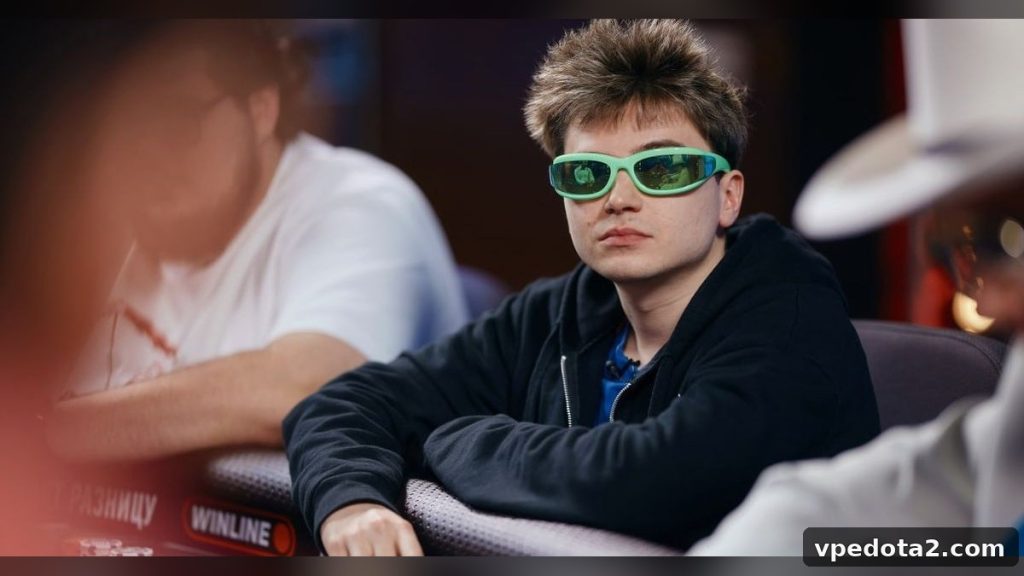
RAMZES666 expects Dota 2 esports to survive a period of smaller prize pools and believes The International will continue for at least the near future. Across two recent discussions, the former professional separated the health of competition from the size of the biggest payouts. He predicted that a scene built around more modest rewards could still be attractive to players, while treating PGL’s rights through 2028 as a reason to expect further Internationals.
His financial argument begins with a change in perspective. RAMZES666 said prize pools of $200,000 to $300,000 would still be good money for competitors when compared with ordinary employment. He described players from his own era as spoiled by the larger rewards they had experienced, suggesting that the previous peak should not be the only measure of whether a professional scene is viable. The range was his personal estimate, not a policy announced by Valve, ESL or PGL. He did not claim that every tournament would use the same purse or that every participant would receive those sums. Instead, he argued that a lower ceiling could remain meaningful enough for people to keep pursuing the game. He also supported the idea of academy teams if they can attract an audience, while saying Dota currently has too few of them. That point widens his outlook beyond top-level prize money: a sustainable scene also needs a way for new players to enter it.
A smaller ESL programme gives the debate context
ESL’s announced 2026/2027 programme provides a concrete example of contraction. The operator plans seven Dota 2 events with $3.13 million in combined prize money, a reduction of $1.07 million from the previous season. It has also removed dedicated North American qualifiers. Those are confirmed changes to one tournament circuit, not proof that every organiser will follow the same path. The figures nevertheless explain why the future has become a live subject. A reduced programme changes the number and value of opportunities available through ESL, particularly for a region that no longer has its own qualifying route. RAMZES666’s answer is that contraction does not automatically mean disappearance. In his view, players can still regard competitive Dota as worthwhile at a financial level below the largest historical purses. That position does not resolve how earnings will be distributed or which teams will reach the money. Prize pools describe what an event offers, not a salary available to everyone who tries to qualify. His argument is narrower: the remaining rewards can still be significant enough to support ambition even after the headline total falls.
RAMZES666 applied similar optimism to The International, but with an important qualification. He said PGL’s rights through 2028 made him confident that Valve would hold the championship for at least two more years. At the time, Valve had not announced TI16. The claim is therefore a prediction based on a business relationship, not confirmation from the developer. The same boundary applies to possible locations. Singapore had appeared in rumours, while RAMZES666 also said Kazakhstan could be a good host because PGL had previously organised events there. Neither country was an official destination when he spoke. His surprise that Valve had not announced the next International underlines the uncertainty: he expects continuity, but the date and venue still require an announcement from the organiser.
What is known and what remains a forecast
The two discussions produce a clear near-term picture only when confirmed details and opinion are kept apart. ESL has published a smaller seven-event programme and its combined prize figure. PGL’s rights run through 2028. RAMZES666 has used those conditions to argue that professional Dota and its flagship championship will continue. Valve, however, had not formally announced TI16, and no future host was confirmed. That distinction prevents optimism from turning into a false calendar. Players can plan around the ESL events that have been announced; they cannot treat a rumoured Singapore International or a suggested Kazakhstan event as booked. Likewise, the $200,000-$300,000 range describes the level RAMZES666 believes could sustain interest, not a universal purse already adopted by organisers. His outlook can be summarized without overstating it:
- Confirmed: ESL announced seven events with $3.13 million in combined prize money, $1.07 million below the prior season.
- Forecast: RAMZES666 expects Dota esports and The International to continue despite lower rewards.

| Point | Status |
|---|---|
| ESL 2026/2027 programme | Announced by the tournament operator. |
| The next International | Expected by RAMZES666 but not announced by Valve. |
| Singapore or Kazakhstan host | Discussed as possibilities, not confirmed venues. |
The immediate test of RAMZES666’s view will be whether a leaner circuit still produces stable teams, new talent and meaningful competition. The announced ESL reduction is real; the end of Dota 2 esports is not. His forecast occupies the space between those two facts, with future Valve announcements still needed to settle the International’s calendar.
 EN — English
 DE — Deutsch
 NL — Nederlands
 FR — Français
 SV — Svenska
 NO — Norsk
 DA — Dansk
 ES — Español
 JA — 日本語
 KO — 한국어
Comments (0)
This form is not available here.